Lately I've been thinking about how developments in data technology have helped responsible investing ideas and practices become more mainstream. Improving the collection and flow of information could be considered the essence of responsible investing. More information makes it possible for investors to calculate risks and opportunities more accurately and on longer time-scales. Then the financial markets can reward more responsible business practices and facilitate the spread of better practices. Making ESG data more easily available could be considered a kind of policy intervention as opposed to command and control regulation or market incentives. I wrote a blog post about this on my company blog.
I also did a short talk about it at Phage's fundraiser for Brainlove! I made a simple website with the key points.
Showing posts with label sustainability. Show all posts
Showing posts with label sustainability. Show all posts
Saturday, July 2, 2016

Saturday, October 18, 2014
My Little Poster: Improving Metrics for Corporate Emissions Initiatives
I presented a poster on Thursday night for the BERC Innovation Expo, which is an event at the annual Energy Conference at UC Berkeley!
Here it is! I had many stimulating conversations with people about it, which was pretty exciting.

Here it is! I had many stimulating conversations with people about it, which was pretty exciting.
Saturday, April 19, 2014
Sign up for Oroeco!

http://www.oroeco.com/
I'm still not sure what we're useful for, though, actually. Hopefully we will figure that out soon through looking at user data.
Sunday, April 6, 2014
Corporate Social Responsibility
I'm taking a class this semester called Governance of Global Production with professor Dara O'Rourke. He is a cofounder of Good Guide. http://www.goodguide.com/about
It just occurred to me that he kinda looks like nerdier version of the lead singer of Tool, James Maynard Keenan.


They could be brothers! or maybe just cousins?
Anyway, I was going to riff on the readings I did this week about corporate social responsibility.
In the past decade or so, the idea that a business should be more concerned with creating "shared value" has been gaining momentum. This means that businesses have a responsibility to stakeholders beyond their shareholders such as their employees, their local community, and the global environment.
So far, the prevailing attitude among most business leaders and investors is still that the most important thing to do is to maximize shareholder value. I think it's safe to say that for the most part, corporations are only interested in sustainability as a way to increase the stock price through improving reputation and thus increasing the value of the brand.
Even so, within a corporation there are likely to be champions of corporate social responsibility for its own sake. And there are notable leaders in the corporate world who seem to be truly committed to CSR and sustainability in particular. O'Rourke specifically singles out Unilever as one of them. http://www.sustainable-living.unilever.com/
Those committed to CSR wouldn't say (admit) that CSR may sometimes reduce profits. Instead, they would point out two concepts that change the perspective. The first is that every corporation exists as part of an economy, where it depends on the well-being of the citizens. So it may be true that their CSR initiatives actually benefit all companies in their industry not just themselves. The second concept is that the corporation is planning on sticking around for many years to come. In terms of game theory, it's a repeated game which can make it beneficial in the very long run to internalize more costs and take others' interests into account. This is only slightly different from increasing brand value in that it is a more future-oriented perspective. The brand value motivation would only justify CSR initiatives that would help the corporation get recognition in the near term.
Friday, August 23, 2013
The Essence of Vermont
Last weekend I visited my friend in Vermont who is getting a masters degree in soil biology! It was really fun hanging around Burlington. They have a pedestrian street with some chic stores, farmers market, art market, street performers, and many tourists.
In addition to hanging around Burlington, making dumplings at Lynn's, and playing MarioKart, we went to Shelbourne Farms. It's a model farm and educational center for sustainable farming practices on a wealthy estate. They don't produce as much food anymore, but they still make cheese. We hung around the farm barn where they put out really desensitized animals out for everyone to annoy. There were sheep, goats, alpacas, a cow, calves, chickens, rabbits, pigs, and donkeys. We picked up a really chill chicken. It was sooo cute.
Many people in Vermont seem to be interested and involved with sustainable farming and organic farming.


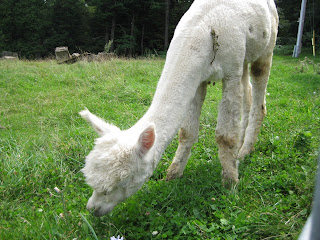


In addition to hanging around Burlington, making dumplings at Lynn's, and playing MarioKart, we went to Shelbourne Farms. It's a model farm and educational center for sustainable farming practices on a wealthy estate. They don't produce as much food anymore, but they still make cheese. We hung around the farm barn where they put out really desensitized animals out for everyone to annoy. There were sheep, goats, alpacas, a cow, calves, chickens, rabbits, pigs, and donkeys. We picked up a really chill chicken. It was sooo cute.
Many people in Vermont seem to be interested and involved with sustainable farming and organic farming.


Thursday, July 21, 2011
Next Climate Conference in Rio
It's not too early to start thinking about the next UN Conference on Sustainable Development. It will be next June 4-6 in Rio DeJaneiro. One of the objectives this time is the Green Economy. I have to admit I'm a little confused, though, because shouldn't this be a theme every year?
At any rate, the UN Environment Programme is putting out a Green Economy Report this year that is pretty comprehensive.
It has plans for Agriculture, Water, Fisheries, Forests, Renewable Energy, Manufacturing, Waste, Buildings, Transport, Tourism, Cities, Modelling, Enabling Conditions, and Finance.
I think I'm personally most interested in Renewable Energy, Manufacturing, and Finance.
At any rate, the UN Environment Programme is putting out a Green Economy Report this year that is pretty comprehensive.
It has plans for Agriculture, Water, Fisheries, Forests, Renewable Energy, Manufacturing, Waste, Buildings, Transport, Tourism, Cities, Modelling, Enabling Conditions, and Finance.
I think I'm personally most interested in Renewable Energy, Manufacturing, and Finance.
Power Struggle
Al Gore recently wrote a piece in the Rolling Stones about politics and climate change. He urges:
I really like the quote by Frederick Douglass. It really also applied to money. The kinds of people who typically end up with a lot of money or power are ruthless. That's how they got where they are. It is self-selection. I often feel that the majority of Americans are too trusting of these people, believing them to be fair-minded and deserving of their power or wealth. To me, it's not about "deserving" it or not. Ruthless people don't think about what is fair. They think about what is the most they can get. In my view, when it comes to money or power, the only difference between earning it and taking it is that when you "earn" it, people give it to you voluntarily. If the average American employee wants a bigger cut of the profits or for wealthy Americans to pay a bigger share of the taxes, they just need to demand it. We don't need to shy away from demands for fear of economic repercussions. Do Americans really think that those at the top worry about the national economy when they decide on their bonuses?
Finally, and above all, don't give up on the political system. Even though it is rigged by special interests, it is not so far gone that candidates and elected officials don't have to pay attention to persistent, engaged and committed individuals. President Franklin Roosevelt once told civil rights leaders who were pressing him for change that he agreed with them about the need for greater equality for black Americans. Then, as the story goes, he added with a wry smile, "Now go out and make me do it."
...
This is not naive; trust me on this. It may take more individual voters to beat the Polluters and Ideologues now than it once did — when special-interest money was less dominant. But when enough people speak this way to candidates, and convince them that they are dead serious about it, change will happen — both in Congress and in the White House. As the great abolitionist leader Frederick Douglass once observed, "Power concedes nothing without a demand. It never did, and it never will."
I really like the quote by Frederick Douglass. It really also applied to money. The kinds of people who typically end up with a lot of money or power are ruthless. That's how they got where they are. It is self-selection. I often feel that the majority of Americans are too trusting of these people, believing them to be fair-minded and deserving of their power or wealth. To me, it's not about "deserving" it or not. Ruthless people don't think about what is fair. They think about what is the most they can get. In my view, when it comes to money or power, the only difference between earning it and taking it is that when you "earn" it, people give it to you voluntarily. If the average American employee wants a bigger cut of the profits or for wealthy Americans to pay a bigger share of the taxes, they just need to demand it. We don't need to shy away from demands for fear of economic repercussions. Do Americans really think that those at the top worry about the national economy when they decide on their bonuses?
Sunday, July 17, 2011
After Darwinism
Lynn recently introduced me to the ideas of Dr. Elisabet Sahtouris. She is a biologist who presents a framework for science that motivates the transition to environmental sustainability. The most interesting part of her talk was that Darwinism only describes the adolescent stage of human society development. After that, there must be cooperation to create a sustainable ecosystem.
I think she mischaracterizes entropy, though. Entropy is orthogonal to destruction vs organization. It is simply going from a higher energy state to a lower energy state. If you build something, like a house, you are adding organization, but you are putting a lot of energy in, so the entropy of the whole system is still increased, although the entropy of the house itself is decreased. The sun decreases entropy on the earth, but in the scope of the universe, entropy is still increased. It seems like people who talk about sustainability and ecology really like talking about entropy. I don't really get it.
I think she mischaracterizes entropy, though. Entropy is orthogonal to destruction vs organization. It is simply going from a higher energy state to a lower energy state. If you build something, like a house, you are adding organization, but you are putting a lot of energy in, so the entropy of the whole system is still increased, although the entropy of the house itself is decreased. The sun decreases entropy on the earth, but in the scope of the universe, entropy is still increased. It seems like people who talk about sustainability and ecology really like talking about entropy. I don't really get it.
Saturday, July 16, 2011
California Green Jobs Report
I read more about the California Workforce Education and Training Needs Assessment for Energy Efficiency, Distributed Generation, and Demand Response.
This is really a line of research I am interested in pursuing. Here are some things that stuck out to me.
They talked about the need for "high-road agreements," which I think means including higher standards in contracts for businesses. The report also stresses the importance of enforcing standards and having certifications for labor force training.
The study found that incorporating environmentally friendly practices and standards into traditional training programs was more important than brand new training programs for new specialized green jobs. That is, greening traditional trades is more effective than anticipating narrow specialized emerging occupations. Actually, this is exciting because this has been my attitude towards green jobs, although it was just based on a hunch. The report's conclusion is more about the technicalities of job creation and training, but the message I was trying to send when I did the Big Picture Panel Lecture was that students should try to work on sustainability within whatever field they chose, not feel like they needed to change careers to work on environmental sustainability. While I think it makes sense to try to get a Sustainability minor or certificate, it would not make sense to make a Sustainability major. At least, not for most people.
I also thought of two other ideas while reading this report. One is that maybe businesses that work on contracts should have online rating sites like Yelp, especially government contractors. Consumer product ratings are now ubiquitous, but taxpayers regularly pay companies that they don't know much about. On the other hand, it may be that this information is readily available, and people are just not that interested.
The other idea is that students in high school and also college should have more information available about possible career choices so they can make better decisions. It seems like to me that most people make career decisions based on their interests, which is good, but I think it would be better if there was at least a little bit of data or infographics. Otherwise, the bit of data that students use are from TV shows and celebrities. It is becoming clear that the middle class has benefited the last three decades from cheap goods in China, and so it has not been particularly difficult to maintain a pretty good standard of living in the United States even if you did not make savvy career choices. It simply has not been that competitive. I think that the labor market is going to get more and more competitive now in the United States, and that more data for students are in order, not just more SAT prep.
This is really a line of research I am interested in pursuing. Here are some things that stuck out to me.
They talked about the need for "high-road agreements," which I think means including higher standards in contracts for businesses. The report also stresses the importance of enforcing standards and having certifications for labor force training.
The study found that incorporating environmentally friendly practices and standards into traditional training programs was more important than brand new training programs for new specialized green jobs. That is, greening traditional trades is more effective than anticipating narrow specialized emerging occupations. Actually, this is exciting because this has been my attitude towards green jobs, although it was just based on a hunch. The report's conclusion is more about the technicalities of job creation and training, but the message I was trying to send when I did the Big Picture Panel Lecture was that students should try to work on sustainability within whatever field they chose, not feel like they needed to change careers to work on environmental sustainability. While I think it makes sense to try to get a Sustainability minor or certificate, it would not make sense to make a Sustainability major. At least, not for most people.
I also thought of two other ideas while reading this report. One is that maybe businesses that work on contracts should have online rating sites like Yelp, especially government contractors. Consumer product ratings are now ubiquitous, but taxpayers regularly pay companies that they don't know much about. On the other hand, it may be that this information is readily available, and people are just not that interested.
The other idea is that students in high school and also college should have more information available about possible career choices so they can make better decisions. It seems like to me that most people make career decisions based on their interests, which is good, but I think it would be better if there was at least a little bit of data or infographics. Otherwise, the bit of data that students use are from TV shows and celebrities. It is becoming clear that the middle class has benefited the last three decades from cheap goods in China, and so it has not been particularly difficult to maintain a pretty good standard of living in the United States even if you did not make savvy career choices. It simply has not been that competitive. I think that the labor market is going to get more and more competitive now in the United States, and that more data for students are in order, not just more SAT prep.
Thursday, August 12, 2010
Clean Energy in Portugal
Really interesting article about clean energy projects in Portugal, the challenges, and issues specific to Portugal.
To force Portugal’s energy transition, Mr. Sócrates’s government restructured and privatized former state energy utilities to create a grid better suited to renewable power sources. To lure private companies into Portugal’s new market, the government gave them contracts locking in a stable price for 15 years — a subsidy that varied by technology and was initially high but decreased with each new contract round...
Portugal was well poised to be a guinea pig because it has large untapped resources of wind and river power, the two most cost-effective renewable sources. Government officials say the energy transformation required no increase in taxes or public debt, precisely because the new sources of electricity, which require no fuel and produce no emissions, replaced electricity previously produced by buying and burning imported natural gas, coal and oil...
But a decade ago in Portugal, as in many places in the United States today, power companies owned not only power generating plants, but also transmission lines. Those companies have little incentive to welcome new sources of renewable energy, which compete with their investment in fossil fuels. So in 2000, Portugal’s first step was to separate making electricity from transporting it, through a mandatory purchase by the government of all transmission lines for electricity and gas at what were deemed fair market prices.
Saturday, June 12, 2010
Sustainable vs Conventional Agriculture
Lynn said she wants to write an article disproving this article about why sustainable agriculture is no good.
Thursday, April 22, 2010
Scientists Want to Communicate with Normal People
I went to a panel discussion at MIT today about communicating about Climate Change, Talking Science in the Age of Sound Bites. It was really really good. The most exciting thing they were talking about was that scientists need to build trust with deniers by acknowledging that values shape how science is interpreted and used.

Beth Daley-
Environmental reporter for the Boston Globe since 1994.
What she said: She talked about the change in print media and how the sciences sections have been downgraded over the years. Also, media has become more polarized politically so more political editorial is considered "news." She noted that there is no common basis for information anymore. There are fewer writers and she has to put out a lot more content rather than be able to work on in depth articles. She used to only write a few articles every year, but now she has to write several stories a day, blog, tweet, and even video-blog. This results in having articles that basically just paraphrase press releases. She talked about the need for science articles to talk more about human narratives to engage people rather than bland statistics.

John Sterman-
Jay W. Forrester Professor of Management at the MIT Sloan School of Management and Director of MIT's System Dynamics Group.
What he said: He talked about how scientists need to sound less depressing by talking about the dream rather than talking about the nightmare. He also made some really interesting points about how scientists and environmentalists need to get away from the "deficiency paradigm," which is the view that global warming deniers just lack "the facts." Instead, there should be more focus on establishing trust and learning to communicate about values and how they influence the interpretation of "the facts." There will need to be scientists who are more trained in communicating with the public. Working on solutions to global warming is not going to be like the Manhattan project, which is what many scientists and engineers envision. It will require the public to be involved in implementation and supportive of policy.

Randy Olson-
Marine biologist turned filmmaker--"Flock of Dodos: The Evolution-Intelligent Design Circus" and "Sizzle: A Global Warming Comedy."
What he said: Scientists are boring. We need more personalities and someone that the public trusts and would go to for advice such as Richard Feynman. However, other scientists criticized Feynman for hamming it up. He is a movie maker and has seen many attempts for scientists and Hollywood directors to collaborate, but they do not know how to speak to each other even when in the same room together. Scientists and environmentalists need to learn how to manage their public relations. They have evolved to be apolitical as people who work on discovering "the truth." However, it is a reality that scientists have ethics and values since they are not impartial machines, so there is no way to be apolitical. Scientists need to acknowledge that there is controversy about climate change instead of dismissing the deniers by simply saying there is consensus amongst the scientific community. He talked about how scientists were really unprepared during "climate gate" as well as the evolution debate and that it's an organizational problem. Someone, perhaps the National Academy of Science, needs to step it up.

Judith Layzer-
Associate Professor of Environmental Policy in the MIT Department of Urban Studies and Planning.
What she said: She paints a starker political picture, saying that most of the political change has been due to advocacy groups. Policymaking is not a linear process. She also suggested that much of the weak response of scientists during "climate gate" is because of temperamental differences. She does not think the National Academy of Science would step into the role of spokesperson for scientists. She points out, though, that conservatives are also depressing doomsday sayers. Sterman responded by saying that the difference is that conservatives are resisting change, saying that there is nothing wrong with our way of life while environmentalists are trying to confront people about their way of life.

Gino Del Guercio-
Executive Producer at Boston Science Communications, Inc. and adjunct professor at the Boston University Center for Science and Medical Journalism.
What he said: He talked about being a producer on the Discovery Channel from the beginning. At first, they made good science shows, but as ratings went up, the ratings became more and more important so that there became a schism amongst the crew where some wanted to keep making science shows and others only cared about the ratings. He said that the title is often more important than the content. One thing people can do is to contribute to public television.

John Hagan-
President of the Manomet Center for Conservation Sciences.
What he said: Science needs to be embedded in social fabric.

Beth Daley-
Environmental reporter for the Boston Globe since 1994.
What she said: She talked about the change in print media and how the sciences sections have been downgraded over the years. Also, media has become more polarized politically so more political editorial is considered "news." She noted that there is no common basis for information anymore. There are fewer writers and she has to put out a lot more content rather than be able to work on in depth articles. She used to only write a few articles every year, but now she has to write several stories a day, blog, tweet, and even video-blog. This results in having articles that basically just paraphrase press releases. She talked about the need for science articles to talk more about human narratives to engage people rather than bland statistics.

John Sterman-
Jay W. Forrester Professor of Management at the MIT Sloan School of Management and Director of MIT's System Dynamics Group.
What he said: He talked about how scientists need to sound less depressing by talking about the dream rather than talking about the nightmare. He also made some really interesting points about how scientists and environmentalists need to get away from the "deficiency paradigm," which is the view that global warming deniers just lack "the facts." Instead, there should be more focus on establishing trust and learning to communicate about values and how they influence the interpretation of "the facts." There will need to be scientists who are more trained in communicating with the public. Working on solutions to global warming is not going to be like the Manhattan project, which is what many scientists and engineers envision. It will require the public to be involved in implementation and supportive of policy.

Randy Olson-
Marine biologist turned filmmaker--"Flock of Dodos: The Evolution-Intelligent Design Circus" and "Sizzle: A Global Warming Comedy."
What he said: Scientists are boring. We need more personalities and someone that the public trusts and would go to for advice such as Richard Feynman. However, other scientists criticized Feynman for hamming it up. He is a movie maker and has seen many attempts for scientists and Hollywood directors to collaborate, but they do not know how to speak to each other even when in the same room together. Scientists and environmentalists need to learn how to manage their public relations. They have evolved to be apolitical as people who work on discovering "the truth." However, it is a reality that scientists have ethics and values since they are not impartial machines, so there is no way to be apolitical. Scientists need to acknowledge that there is controversy about climate change instead of dismissing the deniers by simply saying there is consensus amongst the scientific community. He talked about how scientists were really unprepared during "climate gate" as well as the evolution debate and that it's an organizational problem. Someone, perhaps the National Academy of Science, needs to step it up.

Judith Layzer-
Associate Professor of Environmental Policy in the MIT Department of Urban Studies and Planning.
What she said: She paints a starker political picture, saying that most of the political change has been due to advocacy groups. Policymaking is not a linear process. She also suggested that much of the weak response of scientists during "climate gate" is because of temperamental differences. She does not think the National Academy of Science would step into the role of spokesperson for scientists. She points out, though, that conservatives are also depressing doomsday sayers. Sterman responded by saying that the difference is that conservatives are resisting change, saying that there is nothing wrong with our way of life while environmentalists are trying to confront people about their way of life.

Gino Del Guercio-
Executive Producer at Boston Science Communications, Inc. and adjunct professor at the Boston University Center for Science and Medical Journalism.
What he said: He talked about being a producer on the Discovery Channel from the beginning. At first, they made good science shows, but as ratings went up, the ratings became more and more important so that there became a schism amongst the crew where some wanted to keep making science shows and others only cared about the ratings. He said that the title is often more important than the content. One thing people can do is to contribute to public television.

John Hagan-
President of the Manomet Center for Conservation Sciences.
What he said: Science needs to be embedded in social fabric.
Monday, April 19, 2010
Underlying Ethics that Motivate Environmental Sustainability
I'm always interested in how to convince people that we need to move to an environmentally sustainable way of life. Currently, the main arguments I hear is about how it is a moral imperitive, and that we need to preserve the earth for future generations. This vision for the world usually includes reaching economic equality for everyone and living healthily. However, I think there are some more fundamental ethics that can lead to the conclusion that we need to live within the ecological limits of the earth.
I have been trying to think about what kind of ethical values I have that made it easy for me to buy into environmentalism. The thing is that I did not need to see much data to be convinced that our way of life is unsustainable in the long term, and that we should do something about it.
For one, I value efficiency of resource use. I was brought up not to waste things so at this point seeing things be wasted like food causes a negative emotional response. This ethic is in opposition with the idea that once you have bought something, it doesn't matter what you do with it. If you can afford it, why not? You have paid your hard earned dollars for it.
The second thing is that I feel all processes should be cyclical. I remember reading about diapers when I was little and realizing that they don't decompose so they'll just sit around in landfills forever. These open loop processes bother me because I always think about what will happen eventually. I feel in my gut that everything should be at a steady state, and there should always be a balance. I'm not really sure why.
I'm still trying to think of a better explanation, but at any rate I think this ethic comes out of Chinese cultural traditions, which has been influenced by Daoism and Buddhism. Daoism is embodied by the yin-yang symbol, which says that nothing is pure and everything is made of a balance of two opposing forces. Buddhist philosophy talks about the Middle Way, and how everything should be done to moderation. It now makes sense to me that Buddhism was founded by a prince, who felt unsatisfied with a life of indulgence and opulence. Now my understanding of Buddhism is that it is about managing your mental state to feel positive and satisfied regardless of the level of your material wealth.
There are probably other ethics that are fundamental to the environmental case.
I have been trying to think about what kind of ethical values I have that made it easy for me to buy into environmentalism. The thing is that I did not need to see much data to be convinced that our way of life is unsustainable in the long term, and that we should do something about it.
For one, I value efficiency of resource use. I was brought up not to waste things so at this point seeing things be wasted like food causes a negative emotional response. This ethic is in opposition with the idea that once you have bought something, it doesn't matter what you do with it. If you can afford it, why not? You have paid your hard earned dollars for it.
The second thing is that I feel all processes should be cyclical. I remember reading about diapers when I was little and realizing that they don't decompose so they'll just sit around in landfills forever. These open loop processes bother me because I always think about what will happen eventually. I feel in my gut that everything should be at a steady state, and there should always be a balance. I'm not really sure why.
I'm still trying to think of a better explanation, but at any rate I think this ethic comes out of Chinese cultural traditions, which has been influenced by Daoism and Buddhism. Daoism is embodied by the yin-yang symbol, which says that nothing is pure and everything is made of a balance of two opposing forces. Buddhist philosophy talks about the Middle Way, and how everything should be done to moderation. It now makes sense to me that Buddhism was founded by a prince, who felt unsatisfied with a life of indulgence and opulence. Now my understanding of Buddhism is that it is about managing your mental state to feel positive and satisfied regardless of the level of your material wealth.
There are probably other ethics that are fundamental to the environmental case.
Developing content
I've been doing a lot of discussions on the Climate Collaboratorium.
Today I did a bunch of posts on the debate on behavioral economics. I'd encourage people to join the discussions.
Today I did a bunch of posts on the debate on behavioral economics. I'd encourage people to join the discussions.
I'm also interested in how the economic/political system affects our ethics and behaviors. It is widely accepted that the communist system in the USSR and in post-revolutionary China fostered inefficiencies because people did not have enough incentive to work hard. There is also anecdotal evidence that people take advantage of entitlement programs and benefits from being unionized.
On the other hand, it seems to me that capitalism also causes people to value only doing things that are economically rational. The belief in the invisible hand of the market has been used to rationalize selfishness and why it's best for everyone to be as selfish as possible. Within this context, there is no reason why anyone should curb their consumption or even care about their own grandchildren much less other people. Plus, the possession of things is used to express ourselves and gifts communicate to others how much we appreciate them, etc. This idea that things serve a large social function is discussed in the UK Sustainable Development Commission put out a report "Prosperity without Growth".
I think these are very controversial issues, but it would be great if we could try to study them more systematically.
Wednesday, April 14, 2010
Climate Collaboratorium
I have started volunteering for the Climate Collaboratorium, which is a project by the MIT Center for Collective Intelligence. It takes data from climate models and economic models and allows users to put together policies and debate about them. They are presenting the site this week at a conference, where they hope to get some more user activity, and I'm going to help moderate. I haven't gotten involved with the discussions yet, but I will soon.
Climate Policy and Economics Talk
John Sterman is giving a talk at MIT about climate change and economic implications.
BES International Policy and Economics: What is the Road from Copenhagen?
It's a MIT Club of Boston event.
BES International Policy and Economics: What is the Road from Copenhagen?
It's a MIT Club of Boston event.
Friday, April 9, 2010
Life Cycle Analysis
This NPR piece, Sizing Up Your Green Footprint, is about how to buy consumer products with smaller carbon footprints. The example they use is reading books on an Ipad rather than buying actual books. It may seem better to use an Ipad, but when factoring in all the costs of actually making the Ipad, you'd have to read a lot of e-books before you come out ahead.
I liked this comment, though.
Another thing is that it's hard to compare unlike things. When calculating ecological impact of products we try to put a number on things, whether it be carbon or dollars. However, it may be that cutting down trees for virgin pulp causes more damage than just the carbon sequestration lost. A major challenge is doing analysis with different units.
I liked this comment, though.
When comparing the costs of books and Ipad, I’m curious if Daniel has factored in the cost of building, insuring, heating, cooling, carpeting, etc… of all the space needed for books and libraries over a period of the life of each book. I’m also curious if he has factored in the transportation of books now, and the several other instances they will change hands in the future? Also, the Ipad isn’t just a book, it also does what many computers do, but with less weight, and I’m guessing, with less energy. A better comparison would probably be with a digital reader using digital paper.
Posted by Heath, on April 7th, 2010 at 11:22 AM
Another thing is that it's hard to compare unlike things. When calculating ecological impact of products we try to put a number on things, whether it be carbon or dollars. However, it may be that cutting down trees for virgin pulp causes more damage than just the carbon sequestration lost. A major challenge is doing analysis with different units.
Tuesday, March 2, 2010
Talk on NCSE Conference at MIT
Last night, I gave a talk at MIT, debriefing the conference on the New Green Economy. It was a lot of fun! 12 people showed up. One of them recommended reading about Elinor Ostrom and watching her Nobel Prize in Economics Lecture. I'd like to get better at speaking. Besides being useful for spreading and sharing ideas, it's also generally useful for networking, management jobs, and collaborating with others on projects.
Another interesting note is that the only two women who were there were my friends. That was somewhat surprising.
Another interesting note is that the only two women who were there were my friends. That was somewhat surprising.
Monday, February 22, 2010
Aquaponics
Aquaponics sounds really awesome, especially if the fish can just be fed table scraps/human food rather than having to buy little fish.
Subscribe to:
Posts (Atom)