Monday, October 7, 2013

Tuesday, October 1, 2013
Megapretty Insides
this is my latest creation! it was a drawing that i photoshopped and then had printed out on canvas.


Monday, September 30, 2013
Information Organization

I'm taking a class in the Information School this semester called Information Organization and Retrieval. It's about the intersection of computer science, library science, business information management, and database management. It provides a framework that unifies all those seemingly disparate disciplines. I find it to be extremely relevant right now, especially as I'm implementing a web app myself. Oroeco has to handle customer data as well as science data. We also then "create" new data that is tailored for the customer. Many decisions for how to organize the information are more about what makes sense conceptually than technically. Professor Robert Glushko argues that computer scientists could learn a lot from library science and vice versa.
This is a link to the syllabus.
http://blogs.ischool.berkeley.edu/i202f13/schedule/
Professor Glushko wrote a book The Discipline of Organizing
Saturday, September 21, 2013
Impact Investing and Social Entrepreneurship
Two weeks ago I went to the SOCAP (Social Capital Markets) conference, an annual event hosted by Impact Hub Bay Area, which runs coworking spaces for social entrepreneurs.
The conference was at the Marina, a neighborhood along the northern coast of the peninsula. There was a really nice view of the Golden Gate Bridge and the mountains behind it.
The aim of SOCAP is to foster and promote
Many businesses have some negative externalities, such as making some workers obsolete. Even if this is "efficient" because overall welfare is increased, some people will be winning a lot while others unequivocally lose. This could be prevented by having the winners compensate the losers, but in real life, there's no good mechanism for doing this. One because it's hard to attribute one person's loss with another person's winnings. But also because the % of winnings people might need to give up may be high and not many people would willingly give up that much. If the winners are systematically undercompensating losers, things like neighborhood degradation could count as negative externalities. Traditional investing lead to these kinds of situations, where philanthropy plays the role of redistributing winnings. Then philanthropy is like the left hand handing out tiny band-aids while the right hand is periodically knocking people over. Here are some reasons why impact investing might lead to better outcomes, though.
1. It might be better instead to invest in activities that have smaller returns but don't have as many negative externalities or that redistribute winnings systematically as part of the operations of the business. In fact, economic theory also says that internalizing externalities would be more efficient. Therefore, the lower returns are only artifacts of different system boundaries and differences in accounting.
2. Projects that rely on traditional philanthropy get good at applying for grants to get more funding rather than getting good at making an impact. It is difficult to evaluate the effectiveness of a project within the context of traditional philanthropy. It would be better if indicators of project success were generated as a part of the operations of the project. If a project is able to make back 70% of the original grant, it could be a good indicator that the project is well-managed. Plus, that money can be reinvested into itself. The additional philanthropic dollar can be stretched much longer.
3. Since a dollar can be stretched in impact investing, not as much is needed to make an impact project sustainable. This means impact investing can be accessible to more people on the benefactor side. It also opens up a variety of new kinds of financial arrangements, making financing more accessible to more people on the recipient side.
4. Encouraging projects to become financially sustainable also imparts valuable knowledge about management and finance to communities that need to build up human resources. This is a very big and significant positive externality from impact investing that doesn't show up on the balance sheet.
The conference was at the Marina, a neighborhood along the northern coast of the peninsula. There was a really nice view of the Golden Gate Bridge and the mountains behind it.
The aim of SOCAP is to foster and promote
...a new form of capitalism is arising that recognizes our ability to direct the power and efficiency of market systems toward social impact.The conference brings together impact investors such as the Omidyar Network and social entrepreneurs such as myself. Impact investing is on the rise right now as an alternative to traditional philanthropy. Any arrangement where benefactors expect a less than 100% loss could be considered impact investing. They might get 50% of the money back or even make a return on the investment. According to standard economics and finance theory, this is less efficient than traditional investment, which maximizes returns, coupled with traditional philanthropy. This is because you should be able to get the most returns from traditional investing and thus have more to give out.
Many businesses have some negative externalities, such as making some workers obsolete. Even if this is "efficient" because overall welfare is increased, some people will be winning a lot while others unequivocally lose. This could be prevented by having the winners compensate the losers, but in real life, there's no good mechanism for doing this. One because it's hard to attribute one person's loss with another person's winnings. But also because the % of winnings people might need to give up may be high and not many people would willingly give up that much. If the winners are systematically undercompensating losers, things like neighborhood degradation could count as negative externalities. Traditional investing lead to these kinds of situations, where philanthropy plays the role of redistributing winnings. Then philanthropy is like the left hand handing out tiny band-aids while the right hand is periodically knocking people over. Here are some reasons why impact investing might lead to better outcomes, though.
1. It might be better instead to invest in activities that have smaller returns but don't have as many negative externalities or that redistribute winnings systematically as part of the operations of the business. In fact, economic theory also says that internalizing externalities would be more efficient. Therefore, the lower returns are only artifacts of different system boundaries and differences in accounting.
2. Projects that rely on traditional philanthropy get good at applying for grants to get more funding rather than getting good at making an impact. It is difficult to evaluate the effectiveness of a project within the context of traditional philanthropy. It would be better if indicators of project success were generated as a part of the operations of the project. If a project is able to make back 70% of the original grant, it could be a good indicator that the project is well-managed. Plus, that money can be reinvested into itself. The additional philanthropic dollar can be stretched much longer.
3. Since a dollar can be stretched in impact investing, not as much is needed to make an impact project sustainable. This means impact investing can be accessible to more people on the benefactor side. It also opens up a variety of new kinds of financial arrangements, making financing more accessible to more people on the recipient side.
4. Encouraging projects to become financially sustainable also imparts valuable knowledge about management and finance to communities that need to build up human resources. This is a very big and significant positive externality from impact investing that doesn't show up on the balance sheet.
Tuesday, September 10, 2013
Early Signs From 2005
American RadioWorks did a series of shows called Reports from a Warming Planet.
The reports are from the work of a class taught by John Harte at ERG and environmental journalist Sandy Tolan. For most people, these anecdotes are probably much more persuasive than any scientific evidence that global warming is really happening and that it is a problem.
The reports are from the work of a class taught by John Harte at ERG and environmental journalist Sandy Tolan. For most people, these anecdotes are probably much more persuasive than any scientific evidence that global warming is really happening and that it is a problem.
Monday, September 9, 2013
Nuances About Economics
Ronald Coase was a famous economist who died recently. He came up with the Coase Theorem, which is the concept that initial allocation of an externality or good doesn't matter if there are no transaction costs (a big 'if'). In fact Coase himself acknowledges that in real economic situations, transaction costs are almost never low enough for the initial allocation not to matter. Nuances in economics are typically lost in politics. He's frequently cited by the right wing as being against governmental regulation and pro market solutions for environmental problems.
Severin Borenstein, a professor in the Haas Business School at UC Berkeley sets the record straight.
http://energyathaas.wordpress.com/2013/09/09/learning-and-forgetting-the-wisdom-of-coase/
Thursday, August 29, 2013


Friday, August 23, 2013
The Essence of Vermont
Last weekend I visited my friend in Vermont who is getting a masters degree in soil biology! It was really fun hanging around Burlington. They have a pedestrian street with some chic stores, farmers market, art market, street performers, and many tourists.
In addition to hanging around Burlington, making dumplings at Lynn's, and playing MarioKart, we went to Shelbourne Farms. It's a model farm and educational center for sustainable farming practices on a wealthy estate. They don't produce as much food anymore, but they still make cheese. We hung around the farm barn where they put out really desensitized animals out for everyone to annoy. There were sheep, goats, alpacas, a cow, calves, chickens, rabbits, pigs, and donkeys. We picked up a really chill chicken. It was sooo cute.
Many people in Vermont seem to be interested and involved with sustainable farming and organic farming.


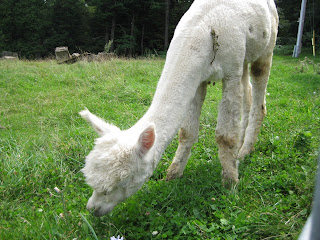


In addition to hanging around Burlington, making dumplings at Lynn's, and playing MarioKart, we went to Shelbourne Farms. It's a model farm and educational center for sustainable farming practices on a wealthy estate. They don't produce as much food anymore, but they still make cheese. We hung around the farm barn where they put out really desensitized animals out for everyone to annoy. There were sheep, goats, alpacas, a cow, calves, chickens, rabbits, pigs, and donkeys. We picked up a really chill chicken. It was sooo cute.
Many people in Vermont seem to be interested and involved with sustainable farming and organic farming.


Monday, August 19, 2013
What I Got From Lean In
I read "Lean In" by Sheryl Sandberg recently. It's basically a collection of tips for women who work in male-dominated professions.
I've always been in male dominated fields, and I could really relate to many of the situations she described. I'm glad that she brought up that in many cases, your own prejudices and insecurities work against you to make the experiences even more negative than they otherwise would have been. Most of the tips involve shifting your own way of thinking or doing things to compensate for your bad habits. It was also helpful for me to read these because it also gave me a better understanding of other women.
The most interesting conflict was the one between Success and Likability, which is what Chapter 3 is focused on. Basically, being nice is necessary for being attractive as a woman in America. Being attractive is important for self-esteem and feeling like a complete human being. At work, there will always be someone who will be upset so matter what you do, even is you are just doing your job. There will always be cases where you are inconveniencing someone, and they may take it personally or simply act like they're taking it personally. If being agreeable is important than being disliked by even one person can be very disconcerting and uncomfortable. As a result, many American women do not feel that leadership positions and being ambitious are fun or rewarding. Sandberg considers this the biggest reason women eventually stop working or don't return to work after having children. It's just not worth it.
I find this really interesting because I actually don't feel the same need to be likable. I really think it is because Chinese culture does not emphasize being nice or even liked in order to be attractive. There is much more of an emphasis on being smart, competent, and hard-working. Those are the qualities one's self-worth are tied to. As my friend would say, we feel the need to be a PMOS - productive member of society. The principle is that if you are helpful you will be liked, but good intentions are useless. So now that I understand the need to be nice and liked, I can better understand American women. I can also see why there are many Chinese and Taiwanese-American women in male-dominated fields and moving up corporate ladders right now.
I wrote up more of my thoughts in a google doc where I listed what I considered to be the main points in each chapter. I'm planning on using it for a discussion on the book.
https://docs.google.com/document/d/1YlKrXba9se9VkIUtT5pF8IMCw5lmvfdrHP9fMruzPlU/edit#heading=h.k6e9glpyjuvt
I've always been in male dominated fields, and I could really relate to many of the situations she described. I'm glad that she brought up that in many cases, your own prejudices and insecurities work against you to make the experiences even more negative than they otherwise would have been. Most of the tips involve shifting your own way of thinking or doing things to compensate for your bad habits. It was also helpful for me to read these because it also gave me a better understanding of other women.
The most interesting conflict was the one between Success and Likability, which is what Chapter 3 is focused on. Basically, being nice is necessary for being attractive as a woman in America. Being attractive is important for self-esteem and feeling like a complete human being. At work, there will always be someone who will be upset so matter what you do, even is you are just doing your job. There will always be cases where you are inconveniencing someone, and they may take it personally or simply act like they're taking it personally. If being agreeable is important than being disliked by even one person can be very disconcerting and uncomfortable. As a result, many American women do not feel that leadership positions and being ambitious are fun or rewarding. Sandberg considers this the biggest reason women eventually stop working or don't return to work after having children. It's just not worth it.
I find this really interesting because I actually don't feel the same need to be likable. I really think it is because Chinese culture does not emphasize being nice or even liked in order to be attractive. There is much more of an emphasis on being smart, competent, and hard-working. Those are the qualities one's self-worth are tied to. As my friend would say, we feel the need to be a PMOS - productive member of society. The principle is that if you are helpful you will be liked, but good intentions are useless. So now that I understand the need to be nice and liked, I can better understand American women. I can also see why there are many Chinese and Taiwanese-American women in male-dominated fields and moving up corporate ladders right now.
I wrote up more of my thoughts in a google doc where I listed what I considered to be the main points in each chapter. I'm planning on using it for a discussion on the book.
https://docs.google.com/document/d/1YlKrXba9se9VkIUtT5pF8IMCw5lmvfdrHP9fMruzPlU/edit#heading=h.k6e9glpyjuvt
Friday, August 16, 2013
NYC Weekend
I visited some friends in NYC this past weekend with Alicia. It was the first time I really spent any time in Brooklyn, which was pretty nice, actually. We went to Smorgasbord, which was pretty much hipster food booths.
http://www.smorgasburg.com/


We also went and got food massages in Chinatown. We found a place that wasn't sketchy. The guys giving us massages didn't really speak English, so we also got a bonus Chinese lesson. They did talk about learning English from TV shows so they knew "Are you kidding me?"
Alicia and I went to the Guggenheim and the Met. The Guggenheim had a Turrell exhibit, who apparently is kind of a big deal. He has some interesting work, but most of the exhibit was fairly underwhelming while the descriptions were extremely pretentious.
I like the contemporary art at the Met, though. This is one by Joan Mitchell. I guess it's just because I like colors.

http://www.smorgasburg.com/


We also went and got food massages in Chinatown. We found a place that wasn't sketchy. The guys giving us massages didn't really speak English, so we also got a bonus Chinese lesson. They did talk about learning English from TV shows so they knew "Are you kidding me?"
Alicia and I went to the Guggenheim and the Met. The Guggenheim had a Turrell exhibit, who apparently is kind of a big deal. He has some interesting work, but most of the exhibit was fairly underwhelming while the descriptions were extremely pretentious.
I like the contemporary art at the Met, though. This is one by Joan Mitchell. I guess it's just because I like colors.

I also got some crepe cakes at Lady M Confections. It is in fact better than a crepe or a cake.
Subscribe to:
Comments (Atom)